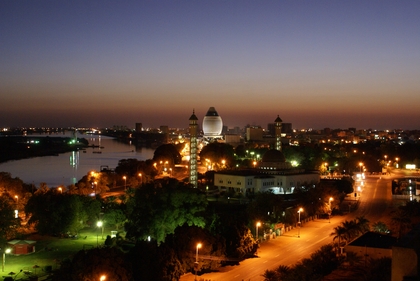
The Commercial Registrar Returns to Khartoum and Signals Renewed Confidence for Foreign Investment in Sudan

The Commercial Registrar Returns to Khartoum and Signals Renewed Confidence for Foreign Investment in Sudan
More Than an Administrative Move
The Commercial Registrar did not cease functioning during the war. Operations continued from Port Sudan.
However, the return of the Commercial Registrar to Khartoum — the capital of Sudan — is not merely a logistical relocation. It is symbolic. It is strategic. And it is deeply significant for foreign investment in Sudan.
In post-conflict environments, the restoration of central institutions to the capital city is often a defining signal of resilience, administrative recovery, and renewed national confidence.
For international law firms, multinational companies and foreign investors assessing Sudan, this development carries weight beyond procedure.
It reflects institutional continuity under the Sudan Companies Act 2015, and it reinforces the capital’s role as the commercial and regulatory centre of the country.
Why the Return to Khartoum Matters
During the conflict, commercial registration functions were successfully maintained from Port Sudan. This ensured that company filings, branch registrations and regulatory processes under the Sudan Companies Act 2015 continued.
But capitals matter.
Khartoum is not simply a geographic location. It is:
- The historic administrative centre of Sudan
- The principal hub for corporate governance
- The core jurisdiction for foreign company registration
- The primary interface for foreign investment in Sudan
The return of the Commercial Registrar to Khartoum signals:
- Restoration of central administrative authority
- Reassertion of institutional normalcy
- Confidence in the capital’s stability
- Commitment to continuity under the Sudan Companies Act 2015
For foreign investment in Sudan, institutional signals are critical. Investors evaluate not only laws on paper, but the visible functioning of regulatory bodies.
The Sudan Companies Act 2015 has remained in force throughout the conflict. What has now changed is the symbolic and operational consolidation of its administration back in the capital.
What This Signals to International Law Firms and Foreign Investors
For international law firms advising clients on Sudan-related matters, this milestone invites a reassessment of Sudan’s regulatory trajectory.
The return of commercial registration to Khartoum demonstrates:
- Institutional Resilience
Despite conflict, regulatory operations were preserved and are now re-centralised - Administrative Confidence
Central authorities have resumed full regulatory presence in the capital. - Continuity of the Sudan Companies Act 2015
The legal framework governing foreign companies and foreign investment in Sudan has remained intact and operational. - Re-Engagement Opportunity
Multinational companies that paused operations or deferred compliance reviews may now reconsider strategic re-entry or file regularisation.
Foreign investment in Sudan requires more than opportunity — it requires institutional reassurance. The physical and administrative return of the Commercial Registrar to Khartoum is precisely such reassurance.
At Sudanese Commercial Law Office (SCLO), we have resumed direct representation of foreign clients before the Commercial Registrar in Khartoum, including matters relating to foreign company branches under the Sudan Companies Act 2015.
This is not merely procedural. It is a marker of re-engagement.
A Strategic Moment for Compliance and Market Reassessment
For foreign investors and international legal advisers, this is an appropriate time to:
- Review the status of foreign company branches
- Assess compliance under the Sudan Companies Act 2015
- Regularise incomplete filings
- Re-evaluate Sudan market exposure
- Explore structured re-entry strategies
Foreign investment in Sudan will be shaped not only by macro-political developments, but by the visible restoration of institutional frameworks.
The Commercial Registrar’s return to Khartoum is one such framework being visibly restored.
A Broader Perspective: Resilience and Reconstruction
Post-war economic recovery is rarely linear. It is incremental. It is institutional. It is symbolic.
The relocation back to Khartoum represents:
- A reaffirmation of Khartoum as Sudan’s commercial centre
- A stabilising message to domestic and international markets
- A platform for rebuilding corporate governance infrastructure
Under the Sudan Companies Act 2015, foreign companies operating in Sudan remain subject to branch registration, appointment of authorised representatives, and ongoing compliance obligations. The regulatory framework has not disappeared. It has endured.
For foreign investment in Sudan, this endurance matters.
It suggests that while circumstances have been challenging, the legal architecture necessary for structured investment remains in place.
SCLO’s Position in This Transition
With an established presence in both Khartoum and Cardiff, SCLO continues to advise international law firms, multinational corporations and foreign investors on Sudanese regulatory and corporate law.
The return of the Commercial Registrar to Khartoum reinforces our ability to:
- Represent foreign companies directly before the Khartoum registry
- Navigate compliance under the Sudan Companies Act 2015
- Provide cross-border coordination between UK and Sudan stakeholders
- Support strategic foreign investment in Sudan during recovery
As Sudan moves from disruption toward reconstruction, early institutional milestones often define the trajectory of confidence.
The Commercial Registrar’s return to the capital is one such milestone.
For foreign investors observing Sudan from abroad, this is not simply administrative news. It is a structural signal.
And structural signals are what serious investors watch most closely.

.jpg)